
Many pet owners have misconceptions about dogs from training and healthcare to feeding and behaviour. Caroline Zambrano dispels the top 12 most common dog myths.
With so much information on pet care available nowadays whether its published on the Internet or spread by word-of-mouth it is hard to know what is true and what is false. Many of these myths are harmless, but problems arise when pet owners who act based on incorrect information can unintentionally endanger their pet, for instance when it comes to toxic food.
Lots of pet owners have misconceptions about how to treat their dogs in all aspects of their care, says Dr Susan Powell from Castle Hill Veterinary Hospital in NSW. If you are looking for information, best to consult a vet or dog trainer to find out the correct story. To help separate fact from fiction, Dogs Life dispels 12 common myths about dogs.
MYTH #1: Cross-breeds are healthier than pure-breeds
It’s a common misconception that a mixed-breed puppy is healthier than a pure-breed because it has a varied heritage. Its all about the genetics, Powell says. Puppies whether pure or mixed inherit genes from each paren’t, and if the paren’ts pass along the genes for a hereditary disease, the pups stand a good chance of having that genetic disorder.
Certain breeds are known to have genetic ailments. There are several inherent diseases to look out for in Border Collies, for instance, such as hip and elbow dysplasia, Collie Eye Anomaly (CEA), Ceroid Lipofuscinosis (CL), Osteochondrosis Dissecans (OCD) and Trapped Neutrophil Syndrome (TNS).
A cross-breed has the potential to inherit the genetic disorders from every breed in his background. However, responsible breeders screen the dogs they breed and can move away from these disorders when possible. For more about hereditary diseases, speak to your veterinarian.
MYTH #2: Dogs eat grass when they’re sick
It’s a common myth that dogs only eat grass if they have a stomach ache. There are many theories on why they eat grass, but nothing is proven, Powell says. Some dogs just like it, but some dogs do eat grass when they feel sick in order to induce vomiting.
Dogs descended from wild wolves and foxes that ate all parts of their kill, including the stomach contents of many animals that ate berries and grass. Many scientists believe grass was once part of their normal diet and eating small amounts is normal.
MYTH #3: Dogs eat their poo because of nutrient imbalance
Unless there is a medical reason causing the behaviour, eating faeces (also called coprophagia) is normal, although there is potential for it to pose a problem. It all comes down to whether the faeces-eating dogs owner can stomach the episodes!
There is usually more than one cause to coprophagia:
– It can be yummy for the dog
– It’s a learned behaviour
– To seek attention
– Maternal behaviour
– Feeding behaviour (dogs that are fed once a day may use coprophagia to supplement their diet)
There are ways to prevent the behaviour, such as putting a muzzle on your dog and picking up faeces regularly so there will be none to eat. Pups often exhibit coprophagia but will often grow out of it, Powell says. It can be caused by undigested nutrients from the food they eat being passed in the stools, which makes them more appealing to eat. Changing the diet to a more digestible food can help prevent it. Behavioural issues also need to be addressed.For more tips on preventing coprophagia, check out the Sept/Oct 2007 edition (issue #85) of Dogs Life.
MYTH #4: Dogs can eat anything that humans do
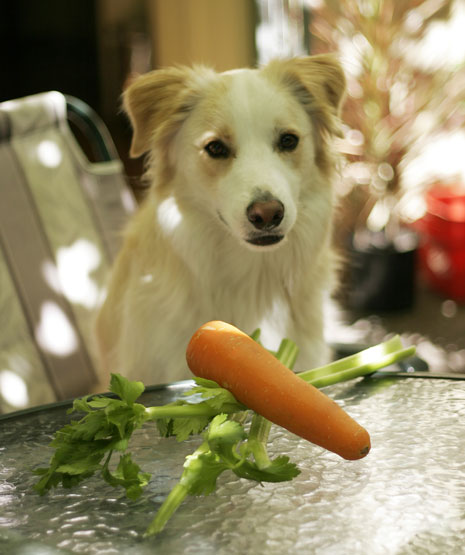
Wrong! Feeding dogs food that humans enjoy can be fatal. Some foods that are toxic to dogs are chocolate, macadamia nuts and onions. Other ingredients that are dangerous for dogs are avocado, potato peelings and green-looking potatoes, rhubarb leaves, raisins and grapes.If you have concerns about your dogs diet, it is best to speak to your veterinarian or canine nutritionist for advice. For more information on toxic foods, check out the July/Aug 2008 edition (issue #90) of Dogs Life.
MYTH #5: A wagging tail means a dog is friendly
Dogs communicate with each other through complex body language. Certainly, dogs do NOT only wag their tail when they are happy, Powell says. Tail wagging can be a sign of aggression, submissiveness, confusion or happiness.A tail wag is only one of the signs to look for when meeting a dog, such as ear position, hackles, head position, eyes, expression, etc. Since its not always easy to tell if the dog is friendly, its best to ask the owner if their dog is friendly before approaching.
Read the rest of this story in our current issue of Dogs Life!
You need to look after your pooch's health - check out our all-new DOGSLife Directory